
Used Good
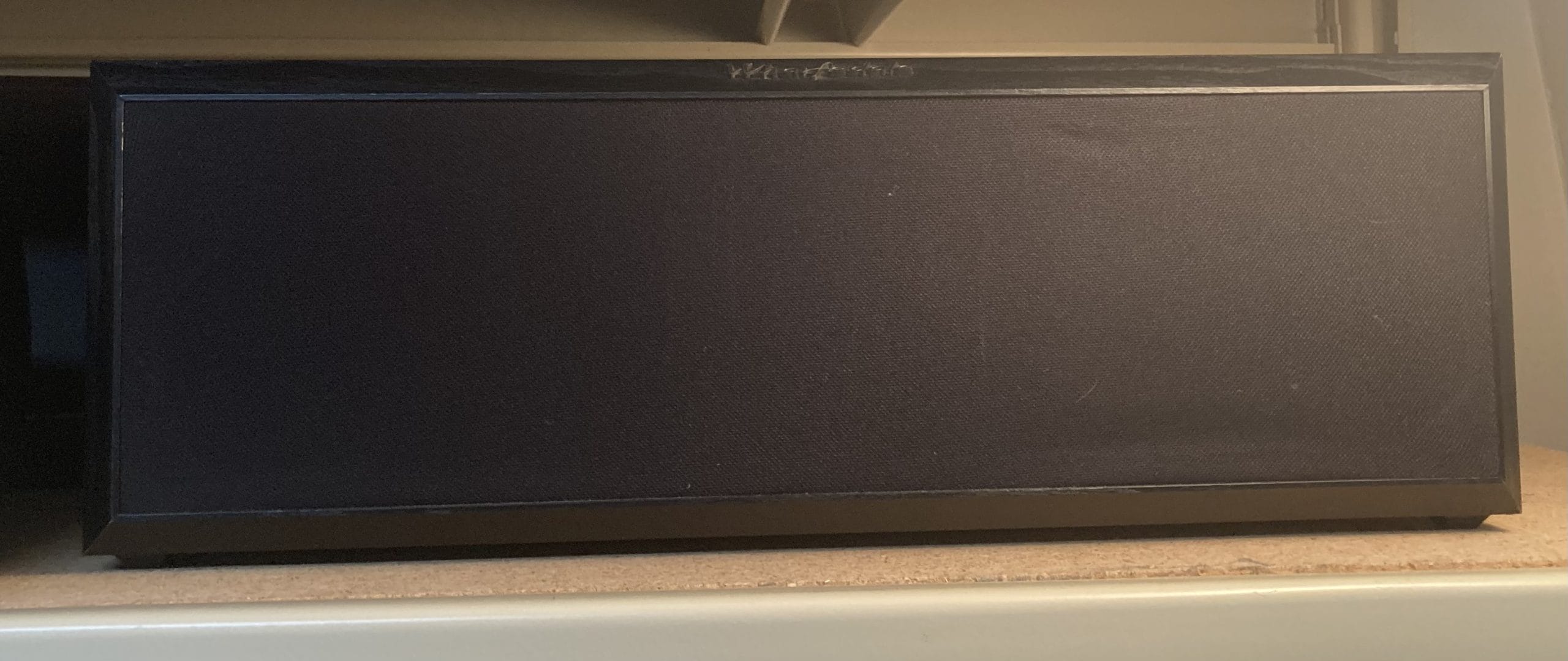
Wharfedale Opal Center Speaker
Status & Appearance:
$125.00
Related products

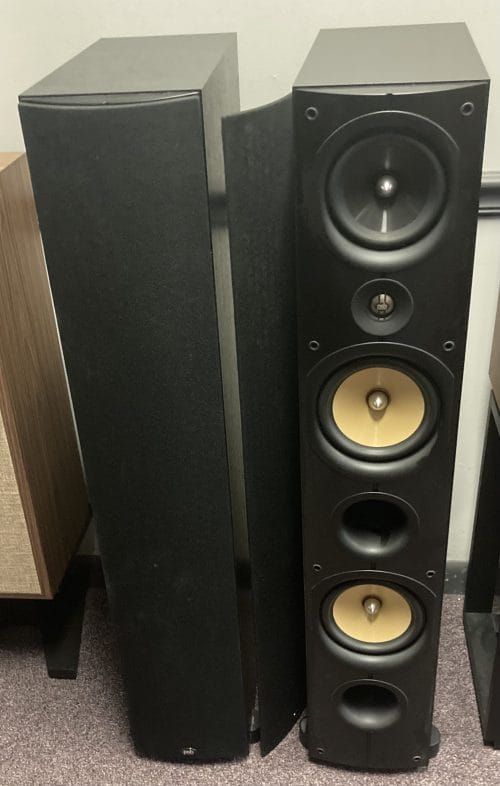
PSB X2T Speakers
$995.00- Sale!

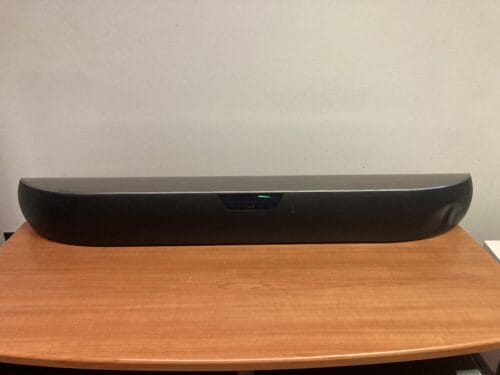
B&W Panorama 2 sound bar
$2,200.00Original price was: $2,200.00.$795.00Current price is: $795.00.
Description
The Wharfedale Opal Center channel speaker historically served as the voice anchor in Wharfedale’s Opal series surround‑sound packages. Designed alongside Opal bookshelf and floorstanding models, this center channel aimed to deliver clear, focused dialogue and cohesive front soundstage performance for both music and home‑theater applications.
Wharfedale’s Opal range was oriented toward mid‑level audiophiles and dedicated film watchers who wanted better performance than basic consumer speakers without paying top‑tier prices. The Opal series was known for its neutral, articulate British sound signature—a balanced tonal presentation with controlled bass, detailed mids, and smooth treble extension that helped voices and sound effects sound natural and intelligible.
Unlike modern designs that often prioritize ultra‑wide dispersion or digital crossovers, the Opal Center took a straightforward, speaker‑centric approach: employing dual mid/woofers for midrange punch and bass support, paired with a soft dome tweeter for high‑frequency clarity. This classic configuration helped ensure that dialogue remained anchored firmly to the screen, a quality especially useful in movie soundtracks where clarity of speech is paramount.
Owners of Opal systems that included this center channel often describe their overall sound as “smooth and musical with a relaxed character”, making them appealing for long listening sessions without listener fatigue. When integrated with matching Opal L/R speakers, the center channel contributed to a cohesive sonic palette across the front soundstage, minimizing the perceptual gaps that sometimes occur with mismatched speakers from different lines.
In terms of physical design, the Opal Center shared the solid, straightforward cabinet construction typical of Wharfedale speakers of its era. Cabinets were magnetically shielded (allowing placement near CRT TVs at the time) and featured binding posts for secure speaker connections. The Opal Center’s modest sensitivity and moderate power handling meant it worked well with a wide range of AV receivers or stereo amplifiers—not requiring exotic amplification to sound balanced at listening levels.
While specific measurements varied by production run and market, typical Opal Center specs reportedly included sensitivity around 88 dB, a nominal impedance near 8 Ω, and a power handling rating around 100 W RMS—all consistent with companion Opal speakers. These values placed the Opal center comfortably in the mid‑tier speaker class: not aggressively loud, but well‑suited for medium listening rooms with average power receivers.
Over time, the Opal series has become somewhat dated compared with modern cabinet designs and driver technology. However, vintage audio collectors and budget surround enthusiasts still appreciate Opal center channels for their classic tonal balance, reliability, and integration with other vintage Wharfedale speakers.
Review Quotes (Historical / Enthusiast)
“Wharfedale’s Opal series delivered clean, articulate voices and pleasant musical character in classic setups.” — general enthusiast comment on Opal speakers.
“In surround use, the Opal center kept dialogue well anchored and intelligible across typical viewing distances.” — period speaker listing description.
“Smooth, neutral British sound that blends well with stereo fronts.” — typical owner sentiment on older Wharfedale models.
Key Specifications (Typical / Vintage Estimates)
Speaker Type: Dedicated center channel (bass‑reflex)
Drivers: Dual mid/bass drivers + soft‑dome tweeter
Power Handling: ~100 W RMS into 8 Ω
Sensitivity: ~88 dB @ 2.83 V/1 m
Nominal Impedance: ~8 Ω
Frequency Response: Approx. ~60 Hz – 20 kHz (varies by unit)
Crossover: Passive multi‑way network (typical)
Cabinet: Sealed or rear‑ported bass reflex (vintage Wharfedale design)
Binding Posts: Non‑biwire standard posts
Magnetic Shielding: Yes (allows CRT placement)