
Used Good
Magnepan MG-III Speakers
Status & Appearance:
$2,295.00 Original price was: $2,295.00.$500.00Current price is: $500.00.
Related products
-
Sale!

Unity Audio Signature 1 Special Edition Speakers
$6,000.00Original price was: $6,000.00.$1,995.00Current price is: $1,995.00. -
Sale!

Thiel SCS3 Speakers
$3,150.00Original price was: $3,150.00.$995.00Current price is: $995.00.
Description
The Magnepan Magneplanar MG-III, often referred to as the MG-3, represents an important chapter in the evolution of high-performance planar loudspeakers. Introduced in the early 1980s, this large, three-way floorstanding speaker combined Magnepan’s planar-magnetic bass and midrange technology with a true-ribbon tweeter, delivering an alternative to the conventional box speakers that dominated the high-end audio market. The MG-III refined the company’s established design philosophy, emphasizing transparency, spaciousness, and lifelike musical reproduction rather than sheer output or exaggerated bass.
Unlike conventional loudspeakers that use cone drivers mounted inside rigid cabinets, the MG-III employs thin, broad diaphragms suspended within a tall, relatively shallow frame. Magnetic forces drive the planar-magnetic bass and midrange sections, distributing sound over a much larger radiating surface than a typical cone driver. This approach helps minimize certain forms of mechanical coloration and contributes to the speaker’s distinctive open, unboxed presentation.
The three-way design incorporates a substantial planar-magnetic bass section, a dedicated planar-magnetic midrange panel, and a narrow ribbon tweeter measuring approximately 57 inches long. The ribbon’s exceptionally light conductive element responds rapidly to musical signals, helping reproduce delicate high-frequency information, instrumental harmonics, and the reverberation of a recording venue. With a specified frequency response extending from approximately 37Hz to 40kHz, the MG-III offers impressive bandwidth for a loudspeaker of its generation.
Sound quality and listening impressions
The MG-III’s greatest strength is its ability to create a convincing sense of space. Rather than presenting music as a collection of sounds emerging from two individual cabinets, a properly positioned pair can establish a broad, deep soundstage with clearly defined instrumental locations. Vocal recordings, acoustic jazz, classical music, and small ensemble performances particularly benefit from its natural midrange and finely resolved detail.
In his review for Stereophile, Anthony H. Cordesman praised the larger Magnepan design philosophy, recalling that the company’s speakers demonstrated the potential for “a large open soundstage, real dynamics, and musical life.” His assessment captures the qualities that made the MG-III family so appealing to listeners seeking a more realistic musical presentation.
The ribbon tweeter adds a sense of air and delicacy to cymbals, strings, and upper-register piano, while the broad midrange panel reproduces voices with convincing body and tonal continuity. Bass reproduction is articulate and tuneful, although the MG-III does not necessarily deliver the visceral impact or deep-bass pressure of large, modern dynamic speakers or dedicated subwoofer systems. Placement and room acoustics are particularly important.
These speakers do require thoughtful system matching. With nominal impedance around four ohms and sensitivity in the 83–85dB range, the MG-III benefits from a capable amplifier with good current delivery.
Adequate space behind the panels also helps the rear-radiated sound integrate naturally with the room.
Design, construction, and long-term appeal
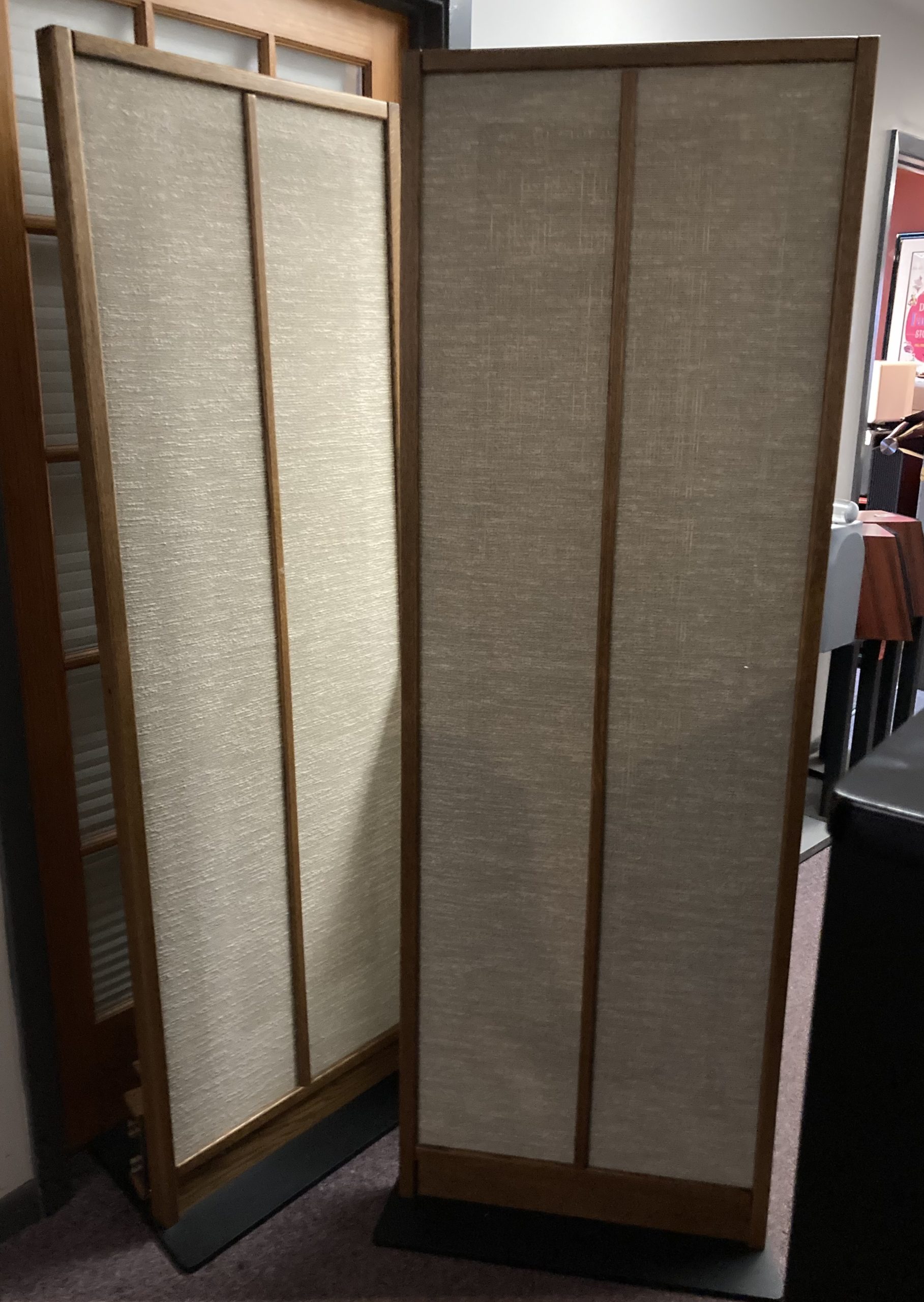
Visually, the MG-III is unmistakably a product of Magnepan’s planar tradition. Its tall, narrow profile, fabric-covered panels, and wood trim give it a distinctive appearance that contrasts sharply with conventional cabinet loudspeakers. Although it occupies considerable vertical space, its shallow construction avoids the bulk of many traditional floorstanders.
The speaker’s strengths are best appreciated in a carefully arranged stereo system. Experimenting with distance from the rear wall, toe-in, and listening position can substantially improve bass balance and imaging.
For enthusiasts who value musical realism, a wide soundstage, and an exceptionally revealing midrange, the Magnepan MG-III remains an intriguing classic. Its presentation favors refinement and coherence over brute-force dynamics, making it particularly rewarding with well-recorded music and quality amplification.
Review quotes and critical commentary
-
Anthony H. Cordesman, Stereophile: “a large open soundstage, real dynamics, and musical life.”
-
Hi-Fi Choice, review of the Magneplanar MG3: The reviewer praised its “detail,” “clear and open” treble, and “sweet and natural” midrange.
These comments reflect the principal attraction of the MG-III design: an unusually transparent, spacious sound that can make recorded performances feel more natural and less constrained by loudspeaker cabinets.
Magnepan MG-III specifications
The following specifications refer to the original MG-III/MG-IIIA generation, not the later MG3.5/R or MG3.6/R models.
-
Type: Three-way, floorstanding planar-magnetic loudspeaker with ribbon tweeter
-
Bass driver: 620-square-inch planar-magnetic diaphragm
-
Midrange driver: 170-square-inch planar-magnetic diaphragm
-
Tweeter: True ribbon, approximately ¼ inch wide by 57 inches long
-
Frequency response: Approximately 37Hz–40kHz, ±4dB
-
Nominal impedance: 4 ohms; impedance varies with frequency
-
Sensitivity: Approximately 83–85dB
-
Recommended amplifier power: 50–200 watts per channel
-
Crossover frequencies: Approximately 300Hz, 800Hz, and 3kHz, depending on the specific version and crossover configuration
-
Dimensions: Approximately 72 inches high × 23 inches wide × 2 inches deep
-
Finish: Fabric-covered panels with wood trim, including oak on standard versions
-
Manufacturer: Magnepan, White Bear Lake, Minnesota
Specifications compiled from historical MG-IIIA references; dimensions, crossover details, and ratings may vary by revision.
Overall assessment: The Magnepan MG-III is a classic high-end loudspeaker for listeners who prioritize transparency, natural vocals, and expansive stereo imaging. Its demanding placement requirements, moderate sensitivity, and vintage condition make careful setup and inspection essential, but a well-maintained pair can still provide a deeply engaging listening experience.