
Used Good
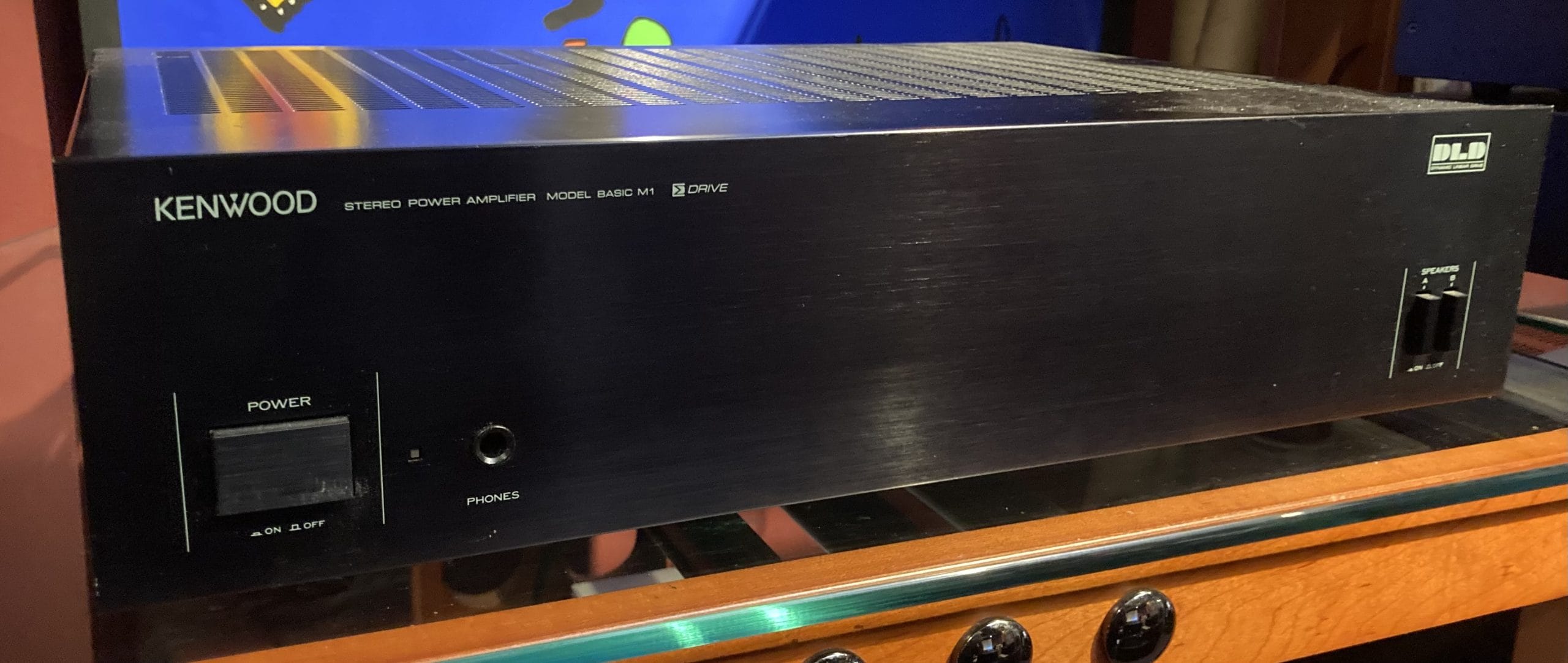
The Kenwood Basic M1 is a solid‑state stereo power amplifier introduced in the early to mid‑1980s as part of Kenwood’s Basic lineup, aimed at combining robust power delivery with clean, musical sound for home hi‑fi systems. It was designed to provide reliable, high‑performance amplification that could satisfy both everyday listeners and those seeking vintage components with enduring audio quality.
At its heart, the Basic M1 uses what Kenwood described as a Dynamic Linear Drive (DLD) circuit — a topology intended to blend the strengths of high‑power output with low distortion and smooth tonal balance. This design aimed to give the amplifier dynamic headroom capable of handling sudden musical peaks without strain, all while keeping distortion negligible at typical listening levels. Owners often describe the M1 as “clean power with plenty of control” and praise its ability to drive a wide range of speakers.
When new, the Basic M1 produced about 105 watts per channel into 8 ohms, enough to comfortably power many bookshelf and floor‑standing speakers of its era and even today, depending on efficiency. Its frequency response stretching from 1 Hz to 300 kHz (±3 dB) speaks to a design intent of preserving musical detail well beyond the audible range, contributing to what many owners have described as “open and extended” sound — especially in the highs and lows.
Vintage audio enthusiasts regularly highlight the amplifier’s excellent damping factor (1000) and impressive signal‑to‑noise ratio (120 dB), factors that contribute to tight bass control and a quiet noise floor. One hobbyist forum thread recounts how the M1 handled reactive speaker loads and crest‑value music signals with ease, comfortably managing dynamic peaks even when pushed near its limits.
Owners who’ve used the Basic M1 in modern systems often remark on its startlingly solid build quality and timeless styling — the unit’s robust metal chassis, practical control layout, and classic Kenwood aesthetic giving it both visual and operational longevity. Some point out that while it doesn’t include modern digital conveniences or protection circuits found in newer amplifiers, its straightforward analog amplification and reliable operation make it a great match for vintage preamplifiers, dac‑equipped systems, or hybrid setups blending old and new gear.
Many find that the Basic M1 provides musical reward well beyond its modest price on the used market, often outperforming expectations for what some recall as a budget‑ish component in its day.
Key Specifications
Here’s a consolidated look at the Kenwood Basic M1 Power Amplifier’s core specifications (vintage era values):
Type: Stereo power amplifier, solid‑state
Power Output: ~105 W per channel into 8 Ω (stereo)
Frequency Response: 1 Hz – 300 kHz (±3 dB)
Total Harmonic Distortion: ~0.005 %
Damping Factor: 1000
Input Sensitivity: 1 V
Signal‑to‑Noise Ratio: 120 dB
Speaker Load Impedance: 4 Ω – 16 Ω
Dynamic Headroom: Designed for large dynamic peaks
Connectivity: RCA inputs; speaker binding posts
Power Consumption: Typically ~270 W (varies by market)
Dimensions: ~440 × 112 × 324 mm (W×H×D)
Weight: ~9.1 kg (20 lb)
Construction: Sturdy metal chassis with vintage Kenwood styling
User & Enthusiast Impressions
“Clean power and dynamic control — easily handles peaks without strain.” — Vintage owner impression.
“Classic build quality and musical presentation.” — Used market feedback.
“Great synergy with vinyl and vintage preamps.” — Forum enthusiast remark.
Bottom Line
The Kenwood Basic M1 Power Amplifier remains a respected classic in the vintage audio world, offering a blend of clean power delivery, low distortion, wide bandwidth, and enduring build quality. Whether used in a restored analog system or integrated with modern sources, it continues to provide engaging music playback and reliable performance decades after its original release.