
Used Good
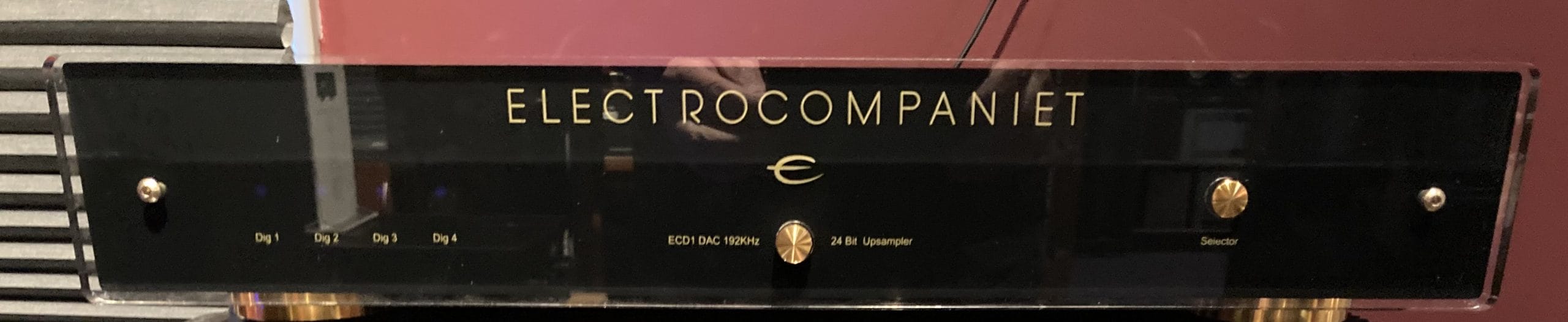
Electrocompaniet ECD1 DAC
Status & Appearance:
$1,995.00
Related products
- Sale!

Auralic VEGA G2.2 Streaming DAC
$7,899.00Original price was: $7,899.00.$3,949.00Current price is: $3,949.00. - Sale!

PS Audio NuWave DAC
$1,299.00Original price was: $1,299.00.$695.00Current price is: $695.00.
Description
Overview — Electrocompaniet ECD‑1 DAC
The Electrocompaniet ECD‑1 is a dedicated upsampling digital‑to‑analog converter designed to elevate the sound quality of digital sources such as CD players, transports, or digital streamers. Positioned in Electrocompaniet’s Classic line of audio components, the ECD‑1 was introduced in the early 2000s as a high‑end DAC capable of 24‑bit/192 kHz conversion and upsampling, bringing deeper resolution and lower noise than standard DAC designs of its era.
What sets the ECD‑1 apart from simpler converters is its upsampling front end, which accepts digital sources from 16 bit up to 24 bit PCM and internally converts everything to 24 bit resolution at 192 kHz. The rationale behind this upsampling architecture is to lower the noise floor and increase dynamic headroom, allowing finer detail and resolution to emerge from the musical signal.
Electrocompaniet equipped the ECD‑1 with a fully balanced analogue output stage, a signature of the company’s design philosophy that minimizes noise and distortion by symmetry. Balanced outputs were particularly prized in high‑end systems for their superior common‑mode noise rejection and potentially more open sound when connected to balanced preamplifiers or amplifiers.
Connectivity on the ECD‑1 was comprehensive for its time: it features a balanced XLR‑AES/EBU input, standard RCA coaxial S/PDIF, and optical TOSLINK, covering all mainstream digital interfaces available when it was new. In addition, the unit provided digital outputs for routing the incoming digital stream to another DAC or processor, an uncommon flexibility at this price point.
Although Electrocompaniet never promoted the ECD‑1 with extensive marketing materials or press reviews, owners and second‑hand commentators have long credited the DAC with a rich midrange and solid rhythmic foundation — qualities that helped it keep relevance even as newer DAC designs emerged. On one community review archive, the ECD‑1 was described as “one of the best DACs ever made at all levels and prices” with “fabulous mids and punchy bass,” the reviewer emphasizing that the sound was engaging compared to other converters they had used.
However, because the ECD‑1 only accepted up to 96 kHz input (while upsampling to 192 kHz), it was never designed for today’s high‑resolution streaming standards like 192 kHz native or DSD — something to consider if you plan to use it with modern sources.
Despite being discontinued, the ECD‑1 remains a vintage DAC favorite among collectors and analog‑leaning digital listeners, particularly for those who enjoy pairing classic Scandinavian engineering with vinyl rigs or older CD transports.
Key Features
Dedicated upsampling DAC with 24‑bit/192 kHz capability
Fully balanced analogue output stage for low noise and high fidelity
Multiple digital inputs: AES/EBU (XLR), S/PDIF (RCA), and optical (TOSLINK)
Digital outputs for routing to other equipment
Analogue outputs: Balanced XLR and unbalanced RCA
Balanced design with symmetrical circuitry to reduce distortion
Designed to improve sound from any CD player or digital source
Product Specifications
DAC Resolution: Up to 24 bit / 192 kHz PCM (internal)
Digital Inputs: AES/EBU (XLR), RCA (S/PDIF), Optical (TOSLINK)
Digital Outputs: RCA (S/PDIF), Optical (TOSLINK)
Analog Outputs: Balanced XLR (3.2 V), Unbalanced RCA (1.6 V)
THD (1 kHz): < 0.002 %
Signal‑to‑Noise Ratio: ~100 dB
Dynamic Range: ~100 dB
Channel Separation: > 90 dB
Frequency Response: 20 Hz – 20 kHz
Output Impedance: 100 Ω
Sampling Frequency In: 32 – 96 kHz
Dimensions: 483 × 255 × 83 mm
Weight: ~5 kg
Power Consumption: ~15 W
Summary:
The Electrocompaniet ECD‑1 DAC stands as a classic Scandinavian approach to digital audio conversion — emphasizing balanced analog circuitry, upsampling refinement, and broad compatibility with legacy digital sources. While not suited for today’s ultra high‑res formats, its engaging musicality and solid engineering continue to make it a cherished choice for vintage hi‑fi systems.